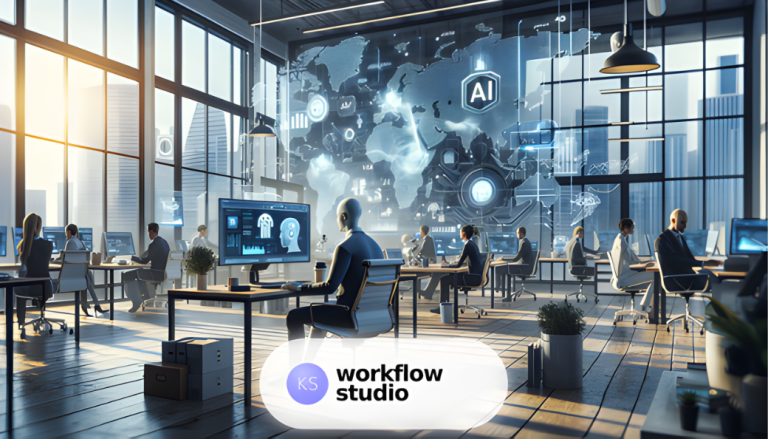

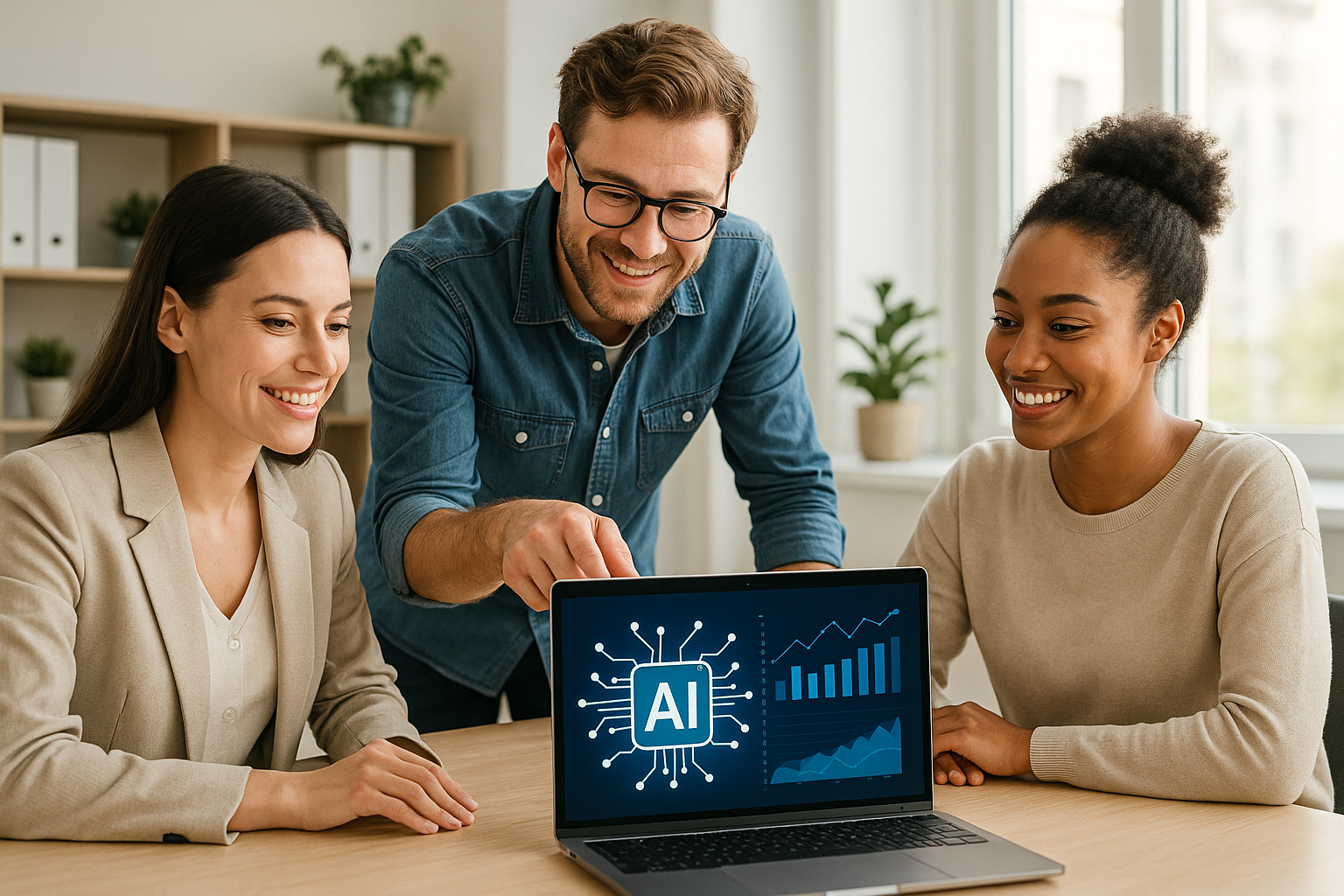
We live in an age where artificial intelligence (AI) is rapidly transforming our work environment. Whether it’s drafting emails or analyzing customer data, AI tools provide support and help boost efficiency in many companies. There is a high level of willingness to integrate AI into everyday work. A recent survey shows that 78% of professionals are open to new AI solutions. But how can you, as a small or medium-sized enterprise (SME), take advantage of these opportunities?
Why is the use of AI crucial for SMEs?
Die Fortschritte der letzten Monate in der KI-Technologie machen es unerlässlich, den eigenen Betrieb auf den Prüfstand zu stellen. Die Integration von KI kann deine Mitarbeiter nicht nur entlasten, sondern auch deren Produktivität erheblich steigern. Gerade in der heutigen Zeit, wo der Wettbewerb hoch ist, ist es wichtig, mithalten zu können.
AI as a Daily Tool for Your Team
Imagine your employees spending hours every day on repetitive tasks: data maintenance, scheduling, or even answering frequently asked questions. This is where AI can help. Chatbots can handle simple customer inquiries, while automated systems generate reports and analyses. This not only makes day-to-day work easier but also gives your team the freedom to focus on more strategic tasks.
Example: A small marketing firm has implemented an AI-powered assistant that analyzes internal data and generates weekly performance reports. As a result, the team now has more time to develop creative campaigns and spends less time poring over numbers.
Process Optimization Through Technology Integration
The key to boosting employee productivity lies in process optimization. AI tools can help make workflow-based tasks more efficient. A good example of this is project management. Tools like Trello or Asana, enhanced with AI features, help keep track of deadlines and make the best use of resources.
The use of AI-powered invoicing and accounts payable management tools is also a possibility. Such systems identify patterns and optimize payment processing, leading to faster cash flow and greater efficiency.
People remain at the center: AI as a support, not a replacement
A common misconception is that AI replaces people. The opposite is true: AI should be seen as a complement. It helps employees make better use of their skills. For example, in sales, AI tools could analyze customer behavior and make recommendations. Human employees can then use these valuable insights to guide their conversations and optimize their sales approach.
In short: motivated employees are productive employees. When your team feels that AI tools are taking some of the load off their shoulders, satisfaction increases—and so does performance.
Practical Workshop: A Step-by-Step Guide to Successful AI Integration
- Needs Assessment: Take a look at the processes in your company. Where are there repetitive tasks? Which areas could be optimized using AI?
- Tool Research: Research relevant AI tools that are suitable for your industry. Pay attention to reviews and user testimonials.
- Pilot phase: Test the tools with a small team. Help employees get familiar with the new technologies and gather feedback.
- Training and Adaptation: Invest in training to ensure your team is fully prepared to use the new tools. Adapt your processes to make the most of these tools.
- Evaluation: After a trial period, you should assess whether the goals you set have been achieved. If necessary, adjust your strategy.
Conclusion: The time for AI is now
Integrating AI into your small business can be the key to boosting employee productivity and streamlining work processes. Take advantage of the opportunities this technology offers to lighten your team’s workload and help them focus on what matters most.
You’re not on your own: KS Workflow Studio can guide you through this process. Let’s talk and work together to find the best solutions for your business.